

Why 30 Day Challenges Work
Habits

Hello, have you ever noticed there’s a lot of ‘stuff’ out there online about 30-day challenges? Or I did 100 squats a day for 30 days, and here’s what happened. Well, I want to talk about why stuff like that can work. It really is something so simple, and that is the idea of building “habits”.
We know that what you do with how you eat is so much more about building structure and giving yourself time for habits to become the norm than it is about knowing what to eat. This is why I’m very keen on people thinking in terms of 30-day commitments, 30-day experiments. Not forever. Not for perfection. Not for “Right, I’m going to become a different human being entirely by Thursday.”
30 days.
This is something that, in our experience, feels very achievable. It is enough to build a routine, give you time for some things to change, and show that you can do this. You probably have heard of 30-day challenges: 30 days of walking, 30 days of no alcohol, 30 days of push-ups, 30 days of cold showers. But the point of the 30-day challenge isn’t really the challenge. The point of a 30-day challenge is about being consistent.
It’s about doing something daily so that eventually it becomes your habit rather than relying on motivation.
And motivation is very tricky; it’s very unreliable. Some days you feel motivated, you’re focused, and you’ve got that extra energy. Some days you feel fatigued, you’re busy, you’re hungry, you’re stressed, and you’re surrounded by temptation. That’s where habits come in. A habit is something you are doing sufficiently often that it becomes your default. Brushing your teeth is a habit, putting on a seatbelt is a habit. You do these things because this is what you do. This is normal.
It’s about building habits like this so the way of eating is less dramatic and less complicated but more normal and more automatic.

This is something that both your body and your brain need time for. Your body needs time for that transition away from carbohydrate dependence and into a state where you are using your body fat more efficiently as your fuel source. But your brain needs time to form new habits. It could be a habit related to breakfast, or a habit relating to what you buy, or a habit relating to your snacks, or a habit relating to what you do when you’re tired, or when you’re stressed, or in a social setting.
That’s why we do this process step by step because everything overnight just feels like such a big mountain to climb. It often causes people to give up, whereas a 30-day commitment is a clear focus, it doesn’t mean “I can never have this food again”, it means “I’m going to have a proper go at this for the next 30 days.” This is a lot more realistic; it’s a lot more sustainable. The most common reason why people aren’t successful is not because people are lazy or because people don’t have good intention.
The most common reason is that they try to live their lives relying on willpower in an environment that is designed to constantly challenge that willpower.
If the cupboards are full of foods that trigger your cravings and if your lifestyle involves bread for breakfast, or cereal for breakfast, or snacks, or convenience foods, every day is going to be an ongoing negotiation and that’s just a recipe for failure. Relying on willpower, relying on good intentions, it’s a terrible strategy. Willpower is a very limited resource. Willpower does have bad days and willpower will say, “I’ve had a stressful day, I’ll go back to my way of eating Monday.”
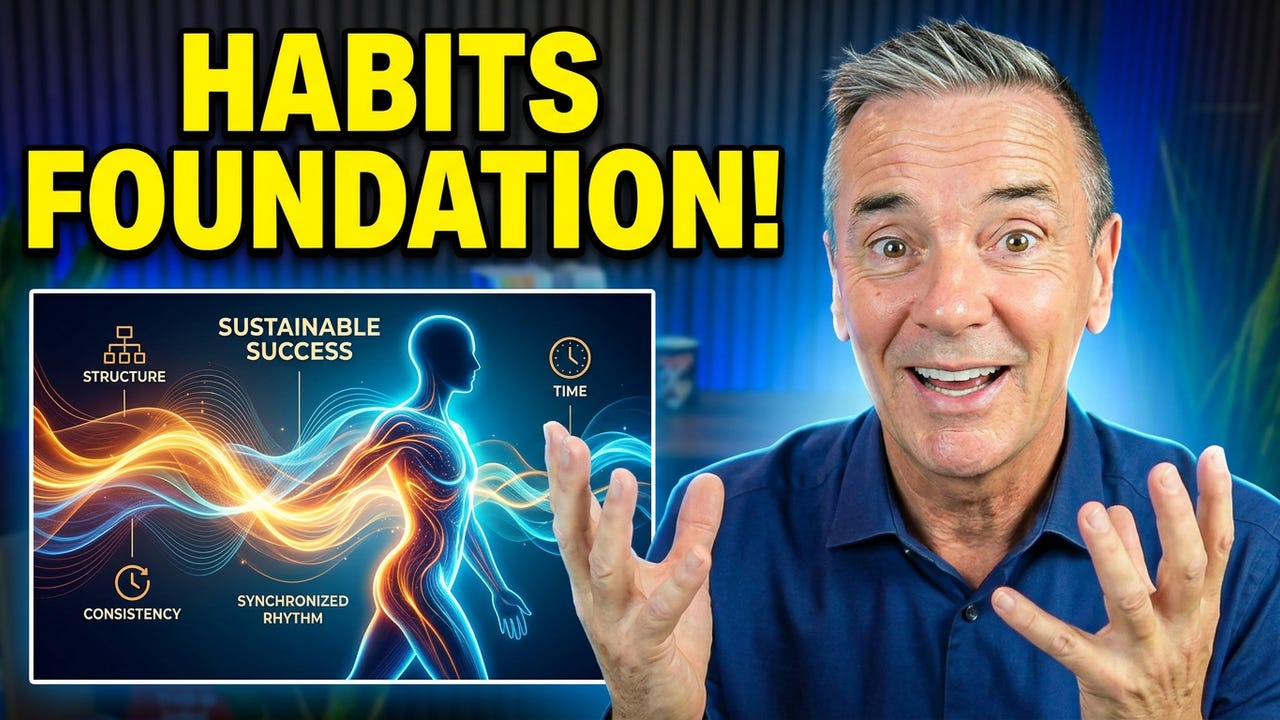
Habits on the other hand, are a good strategy.
Habits mean you have less decisions to make each day. This is so important because it’s the decisions that deplete energy. If you are having to have a decision-making process every time you’re eating something, and if there are always options to have, and there’s always negotiations, then it just wears you down.
It’s about making the essentials, what you need to know to know what works, what you need to know not to eat, what a meal would look like, what you do when you are hungry, how you know these things. These are automatic and it’s in that automaticity where freedom really starts to emerge for you. It’s not a question of having lots of choice but of taking away all that decision-making from your day-to-day. And a good way to think about this is that it’s not really just adding a new habit. The new pattern displaces an old, bad pattern. Eat breakfast with a focus on protein, so there is no cereal, no toast and jam, no processed bars. Make regular, decent meals, and you’re much less likely to graze. Eat sufficient fat and protein, and you’re unlikely to be pulled by cravings. Plan ahead, and you’re less likely to reach for easy food. This is about more than just saying no. It’s about filling your days with helpful habits rather than habits that work against you. This is connected thinking.
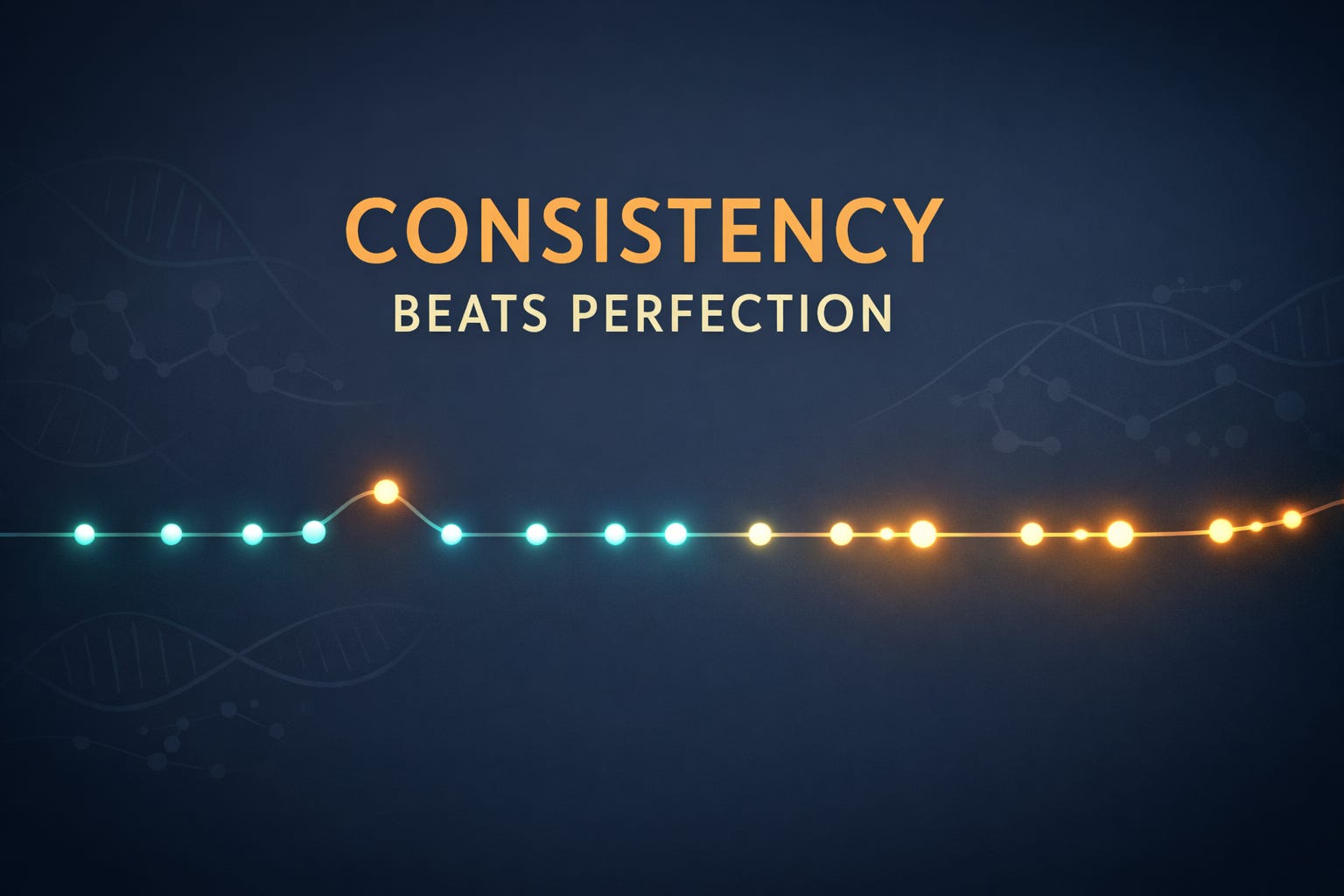
Consistency beats perfection
It’s vital to understand that the goal isn’t perfection. The goal is consistency. Perfection says: if I slip up once then I’ve let myself and my body down. Consistency says: I know what I’m trying to achieve, and I’m aiming to come back to this. Life is life. Things will get in the way. Some days will be too busy, some social situations will be tricky, and sometimes your planning won’t cover every eventuality. Don’t let this make you feel you’ve missed your target, though. Simply move to the next meal to return to your plan. Not next week, or next month, or when you’ve emptied the cupboard and said: well, it’s all been ruined now. The next meal. This is how you make consistency work. And consistency is what makes it happen.
Accountability helps
Another reason that 30 days is the right time period is because it introduces the idea of accountability: making you feel connected and keeping you on course. A 30-day goal is a goal in itself, a promise you give yourself, but it helps if others know too. That could be a group of people online, a friend, a partner, or someone else doing The Metabolic Reset. The important point is to not feel like you’re doing this on your own. People will have ideas about what you should eat and what your eating style should be. They might say that cereal is essential and meat is a bit dubious. That won’t necessarily be because these are complex points but because they aren’t familiar with the science and the reasoning behind your choices. It’s helpful if there are people around you who understand and believe in what you’re doing. Having a community to belong to isn’t a weakness. It’s an advantage. Sportspeople have trainers. Actors have coaches. Business people have deadlines. Doctors schedule appointments to be seen later. Goals are easier to achieve when you have a support mechanism in place.
Thirty days is also a short-term target. It’s a goal which is close, which you can look forward to and which doesn’t seem too far off in the distance. It’s great if you want to make better decisions for the next five years. That’s a wonderful, positive goal. But it doesn’t help if someone wants to know what they should eat for lunch today. You can say: I’m doing this for the next 30 days. The next 30 days, I’m going to cut out grain. The next 30 days, I’m making proper meals and stopping the grazing. Or: The next 30 days, I’m going to see how low-carb, keto or carnivore eating feels for me. This is a very clear, defined target. And targets make it much easier to cut out negotiation. Can I have bread? No. Pasta? No. Cereal? No. This is clear-cut and it makes choosing easier and easier to choose again.
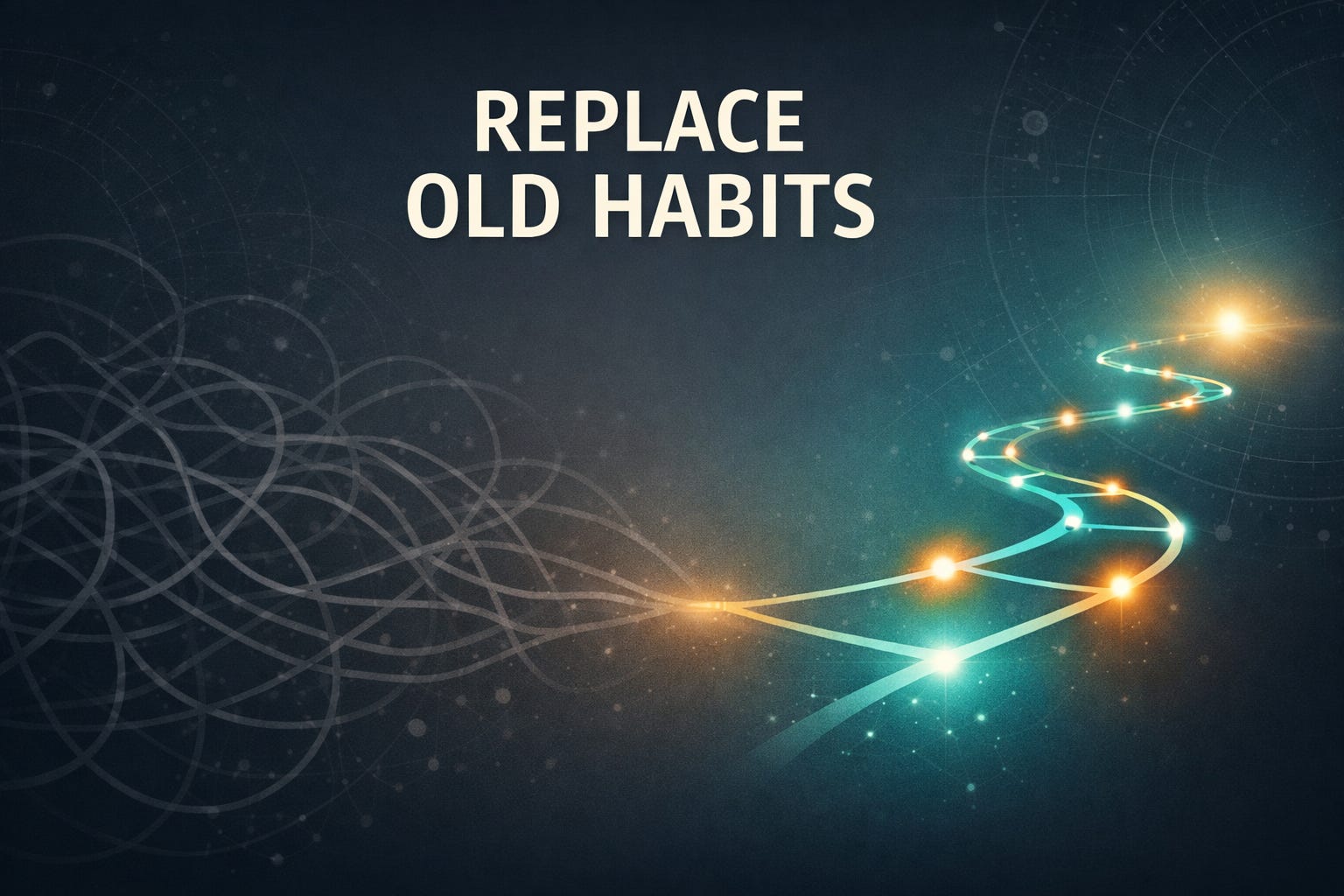
The good news is that your brain isn’t static. It can adapt.
That’s the science of neuroplasticity. It’s simply the idea that your brain physically reorganises itself in response to the things you keep doing. So when you are actively choosing a different meal, setting a new schedule, and sidestepping old triggers, you are doing more than tweaking your diet. You are rewiring your brain. The early stages of this shift might feel strange. You might have to pause and decide: What should I eat? What can I grab at the store? What should I have when I get hungry?
But eventually, the right answers start coming naturally. That’s the goal. We’re not trying to turn your life into a difficult chore. We’re trying to make it effortless to do what’s good for you. Celebrate Your Wins: Finishing the full 30 days is an achievement. It is something worth taking pride in. The confidence you gain from this will be profound because you now have undeniable proof that you are capable of changing your habits. We all have our stories: a history of failed diets, regained weight, or a history of beating ourselves up for those failures. But often, it wasn’t us that was the issue. It was our approach.
So when a person completes 30 days of a lower carbohydrate, cleaner, more nutritious diet and starts feeling healthier as a result, they realize, “I can do this.”
That’s a real game-changer. When we discuss success, let’s make sure we aren’t simply fixating on what the scale says. The number on the scale can be great info, but it isn’t everything.
Look for the non-scale victories.
Better energy.
Fewer cravings.
A flatter stomach.
Better sleep.
Clearer thinking.
Fits better clothing.
Less mindless snacking.
Less food obsession.
More control around food.
Those things might not register on the scale at all. You may not see a shift at all on the scale. But your waist can shrink, the fit of your clothes can improve, you can feel better, your appetite might change, and that’s all success. If you are judging your success based only on the scale, you might just be ignoring progress you have truly made. Health is so much bigger than losing weight. Having a bad day is no reason for a bad week. Sometimes people tend to think in black and white, saying, “I’m either on it or I have blown it.” But that is not useful. If you make a decision that you’re unhappy with, learn from it and keep going.
Try this:
Why? Was I hungry? Was I unprepared? Was I fatigued? Was I stressed? Had I not eaten enough earlier in the day? Did I still have trigger foods in the house? That’s data. No one is there to shame you. You’ll learn and set yourself up for success tomorrow. The goal here is not for you to beat yourself up.
Final Words
Spend these next 30 days building a new way of eating. Perfection isn’t the goal; try for a consistent practice of eating this way. Keep it up. Be proud of yourself when you do well. When in doubt, keep thinking about what is a good next choice. Not the next 20 years. Not the next 200 meals. Just the next good choice. That is how we change ourselves. I will say that’s less painful than 30 days of cold showers.
Building habits is not about becoming perfect overnight; it is about making the next good decision often enough that it starts to become normal. Real change usually comes from repeated, sensible actions — the small daily choices that quietly move you closer to better health, better control, and a way of eating you can actually live with. If you would like support from a like-minded, common-sense community, you can join us here: https://www.skool.com/common-sense-carnivore/plans. If you would prefer more personalised help, you can book a one-to-one consultation here: www.theukcarnivore.com/booking. And if you would like structured support with fasting, you can join my fasting group here: https://5dayfastingchallenge.app.clientclub.net/communities/groups/5-day-fasting-challenge/about. Keep it simple, stay consistent, and remember — if you do fall off track, don’t turn it into a full-blown Netflix documentary called The Day I Ate the Biscuit. Just reset, refocus, and get back to the next good decision.
A very good article, whose advice applies far beyond the realm of diet and even health. Almost everything is easier if you enlist the power of habit.
Thank you this post today. I'm signed up for the Aug 3 fast. I'm a Carnivore from 2022, got off-track end of 2024 started gaining, (currently have gained back 17 of the 40 lbs) Hashi diagnosed in 1/2025, trying to heal, be kind to myself and get back to the Carnivore/Lion that does make me feel better.